
Being a director or officer for a Lynnwood nonprofit or HOA is a lot like leading a wolf pack. You’re responsible for the territory, the resources, and the well-being of the group. But in the legal wilderness of Washington State, even the most well-intentioned leaders can find themselves hunted by lawsuits.
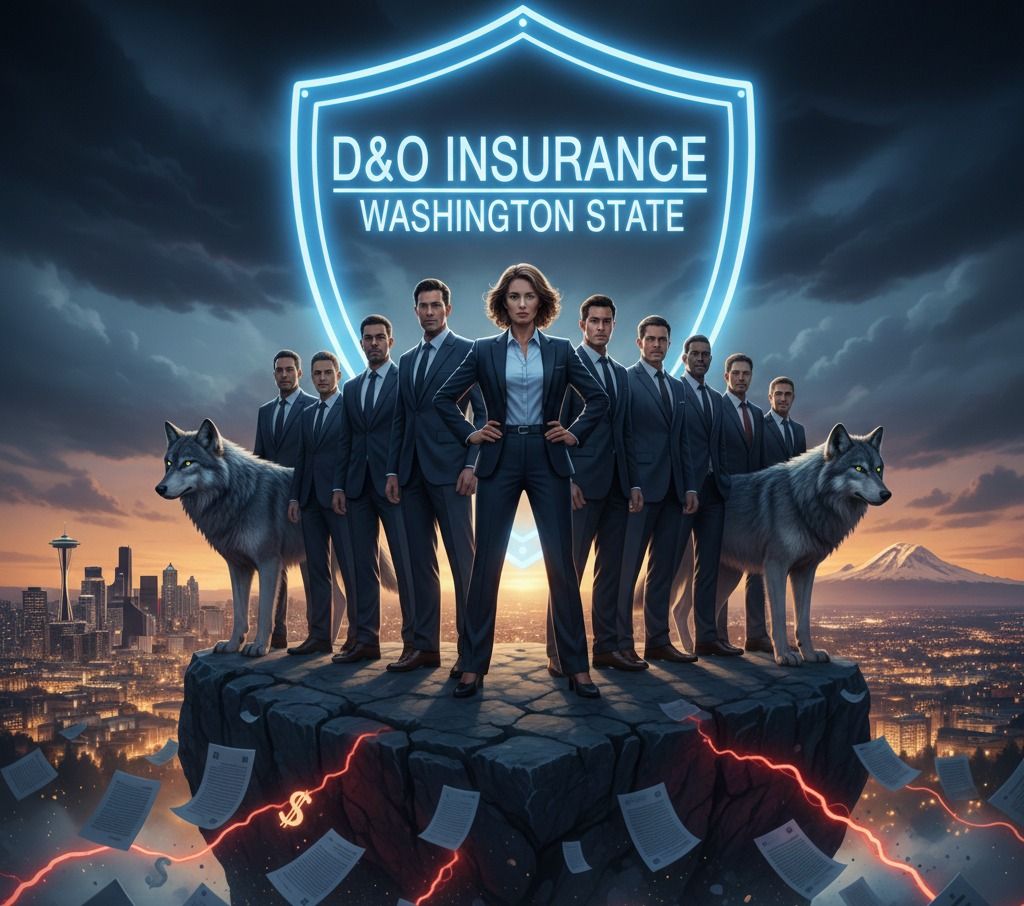
Understanding D&O Insurance in Washington State: Because Leading the Pack Shouldn't Risk Your Den
The "Alpha" Summary
Too busy leading to read? D&O Insurance protects the personal assets of board members from lawsuits alleging "wrongful acts" (bad management decisions). While General Liability covers physical "slips," D&O covers "slips of judgment." For Washington HOAs and Nonprofits, carrying both is the only way to keep the wolves—and the lawyers—at bay.
What is Directors and Officers (D&O) Insurance?
In the insurance world, D&O Insurance is the protective fur that keeps your board members warm when a legal blizzard hits. It provides financial protection if leaders are sued for alleged wrongful acts in their roles.
In Washington, board members can be held personally liable. This means if the pack’s finances are mismanaged, it’s not just the organization’s bank account at risk—it’s your house, your car, and your pup's college fund.
Lawsuits often howl at your door for:
Financial Mismanagement: Oops, the HOA budget has a hole bigger than a badger’s den.
Regulatory Noncompliance: Failing to follow Washington’s specific RCW statutes.
Discrimination Claims: When someone feels excluded from the pack unfairly.
Breaches of Fiduciary Duty: Not acting in the best interest of the community.
D&O vs. General Liability: Know Which Shield to Raise
While they might seem similar, these two policies protect your pack from entirely different predators. Here is the breakdown of how they differ:
The Management Shield: D&O Insurance
The Focus: Protects against "brain" mistakes and management decisions.
The Scenario: A disgruntled homeowner sues the board because they believe the new roof assessment was calculated unfairly.
What it Covers: Legal fees and settlements related to governance, financial mismanagement, and "wrongful acts."
Who it Protects: The individual board members, officers, and their personal assets (like their homes and savings).
The Physical Shield: General Liability (GL)
The Focus: Protects against "body" mistakes and physical accidents.
The Scenario: A guest visiting your nonprofit slips on an icy sidewalk in Lynnwood and breaks their arm.
What it Covers: Legal fees and medical settlements for third-party bodily injury, property damage, and "slip-and-fall" claims.
Who it Protects: The organization or HOA entity as a whole.
Why Washington Packs Need Both Policies
Whether you’re a nonprofit in Lynnwood or an HOA in the Cascades, you’re operating in a highly litigious environment.
Comprehensive Territory Protection: One policy handles the physical world; the other handles the boardroom.
Attract Better Alphas: High-quality volunteers won't join your board if they think they’ll have to pay for a lawyer out of their own pocket.
Survive the Legal Winter: Even a frivolous lawsuit can cost $30,000+ just to dismiss. D&O pays for your defense so you don't have to eat your own tail to survive.
How to Choose the Right D&O and General Liability Insurance Policies
When selecting insurance coverage for your nonprofit or HOA in Washington State, consider the following:
- Coverage Limits: Ensure both policies provide sufficient protection based on your organization’s size and risk level.
- Policy Exclusions: Understand what is and isn’t covered to avoid gaps in protection.
- Claims-Made vs. Occurrence Policies: D&O Insurance is typically claims-made, while General Liability Insurance is often occurrence-based.
The "Scent of a Claim": Claims-Made vs. Occurrence
Insurance policies have two ways of "triggering" coverage. Think of it as the difference between a Security Camera and a Polaroid Photo.
1. Occurrence Policies (The "Security Camera")
Most General Liability policies are "Occurrence" based.
How it works: If the incident (like a slip-and-fall) happens while the policy is active, you are covered forever for that specific event—even if you cancel the policy years later before the lawsuit is actually filed.
The Analogy: It’s like a security camera that recorded the event in 2024. Even if you get a new security system in 2026, you can still go back and watch that 2024 footage to prove what happened.
2. Claims-Made Policies (The "Polaroid Photo")
Almost all D&O Insurance policies are "Claims-Made."
How it works: To be covered, the policy must be active at the exact time the claim is filed (made) against you. If you cancel your policy today and a lawsuit arrives tomorrow for something you did last year, you have zero coverage unless you purchased "Tail Coverage."
The Analogy: It’s like a Polaroid photo. You have to be holding the camera and snap the picture the moment the lawsuit appears. If you already put the camera away (canceled the policy), you missed the shot.
Why This Matters for Your Board
Because D&O is "Claims-Made," you can’t have gaps in your coverage. If a board member makes a controversial decision in 2024, but the HOA doesn't get sued until 2026, you must have an active policy in 2026 to handle the defense.
Pro-Tip from the Pack: If you ever switch insurance agencies or retire from a board, always ask about a "Retroactive Date" or "Tail Coverage" (officially called an Extended Reporting Period). This ensures that the "scent" of your past decisions is still covered by a policy today.
Frequently Asked Questions: Protecting Your Washington Board
Does Washington State law require D&O insurance for HOAs? While Washington’s RCW 64.38 sets the "standard of care" for HOA directors, it doesn't strictly mandate insurance. However, most HOA governing documents do require it to protect volunteers under the Business Judgment Rule.
What is the difference between a 'Claims-Made' and 'Occurrence' policy? An Occurrence policy covers incidents based on when they happened. A Claims-Made policy (standard for D&O) only covers you if the policy is active at the moment the lawsuit is filed. Gaps in coverage can leave directors unprotected for past actions.
Can individual board members be sued personally in Washington? Yes. In Washington State, board members can be named individually in lawsuits alleging financial mismanagement or breach of fiduciary duty. Without D&O Insurance, your personal assets—including your home and savings—could be at risk.
Does General Liability cover a board member's "bad decisions"? No. General Liability is designed for physical accidents like slip-and-fall injuries. It does not cover "errors in judgment" or financial mismanagement. Only a Directors and Officers (D&O) policy protects against governance-related legal claims.
Protect Your Pack with Hood Insurance Agency
Don't wander into the legal woods alone. At Hood Insurance Agency in Lynnwood, WA, we specialize in helping nonprofits and HOAs navigate the thickets of Washington insurance requirements. We’ll help you find a policy that fits your organization’s specific needs—without the boring fluff.
Ready to secure your den? Contact Us today for a quote that actually makes sense.